Why Full Grain Leather Ages Beautifully After Engraving
Engraving does not simply sit on top of leather. On full grain leather, it becomes part of how the material changes over time.
Short Answer
Full grain leather ages beautifully after engraving because it keeps its natural grain, fiber structure, and ability to develop patina. As the leather is used, its color deepens, the surface becomes softer and more lustrous, and the natural texture gains character. The engraved area ages together with the surrounding leather, but often in a slightly different way. That difference can make initials, logos, dates, or artwork look more defined and more personal as the years pass.
This is one reason full grain leather is such a strong choice for personalized leather bags, engraved gifts, and custom business leather goods. A good engraving should not only look attractive on day one. It should still feel meaningful after years of real use.
What Makes Full Grain Leather Different?
Full grain leather is made from the strongest and most natural part of the hide. Unlike corrected-grain leather, it is not heavily sanded or covered with a thick artificial finish. The original grain surface remains visible, including pores, subtle marks, color variation, and natural texture.
Because the surface is not hidden under a heavy coating, full grain leather can absorb small amounts of oil, wax, moisture, and handling over time. These changes create patina: a richer color, a softer sheen, and a more lived-in feel.
On many materials, aging means fading, cracking, or losing structure. On quality full grain leather, aging often means gaining depth. This is especially important when the leather has been engraved.
What Happens When Leather Is Engraved?
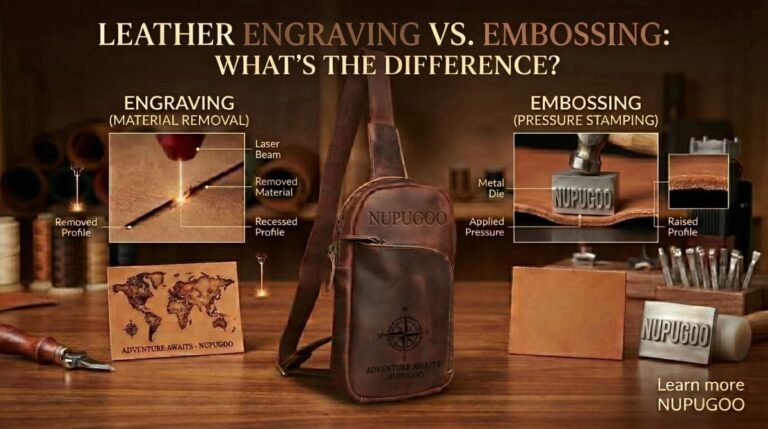
When leather is laser engraved, the laser removes or darkens a controlled area of the surface. On waxed leathers such as crazy horse leather, engraving may remove part of the waxy top layer and expose a lighter or more fibrous area underneath. On vegetable-tanned leather, engraving may create a darker burned mark or a warmer recessed tone, depending on the laser setting and leather color.
The result is not a sticker, print, or coating. It is a physical change in the leather surface.
At first, the engraved mark stands out because of color contrast and texture contrast. Over time, the surrounding leather begins to form patina. The engraved area also absorbs oils and responds to handling, but because its surface structure is slightly different, it develops its own character. The two areas age together while keeping a visible relationship between mark and material.
That is why engraved full grain leather often looks better after use instead of worse.
Why Engraving Can Become More Beautiful Over Time
Full grain leather is a living-looking material, even after it has been made into a bag. It reacts to hands, movement, sunlight, humidity, conditioning products, and daily friction. These changes are gradual, but they are visible.
As the bag is carried, the leather around the engraving may darken and become smoother. Edges and high-touch areas develop a soft polish. Grain patterns become more noticeable. The engraved lines remain part of the surface, but the surrounding patina gives them more depth.
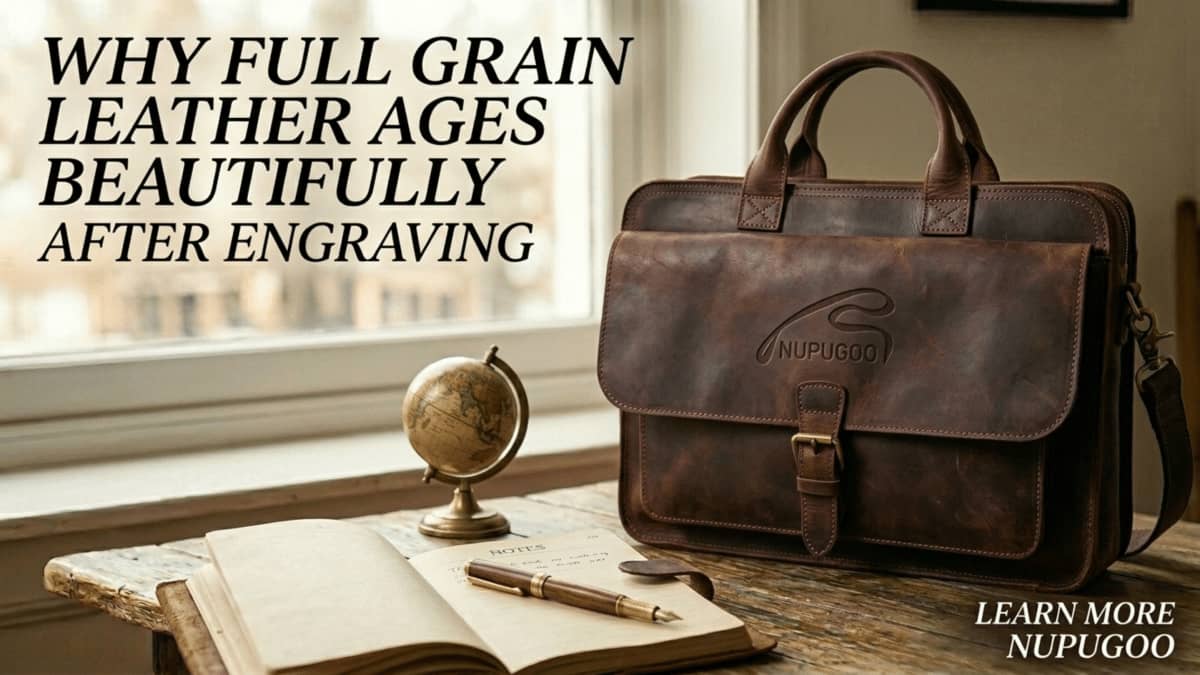
This creates a natural frame around the engraving. A monogram, logo, or date may begin as a clean mark, then slowly become something more integrated and more personal. It no longer looks newly applied. It looks earned.
That is the beauty of full grain leather engraving: the mark does not fight the aging process. It benefits from it.
Engraving vs. Printing on Leather
Printing and engraving age very differently.
Printed marks rely on ink or pigment sitting on top of the material. With enough friction, sunlight, or moisture, printed designs can fade, crack, or peel. Even when the print is high quality, it is still an added layer.
Engraving changes the leather itself. The design is created by altering the surface, not by adding something temporary on top. This makes engraving especially suitable for items meant to be used for years, such as leather tote bags, briefcases, backpacks, messenger bags, wallets, and corporate gifts.
For a fashion item that is only meant to be used for one season, printing may be enough. For a leather bag that is meant to carry a name, brand, or memory for a long time, engraving is usually the more durable and emotionally satisfying choice.
Why Patina Matters for Personalized Leather Bags
Patina is one of the main reasons people love full grain leather. It makes every bag different. Two bags may start from the same leather, color, and pattern, but after months or years of use, they will no longer look exactly the same.
When a bag is personalized, this matters even more.
An engraved name on a full grain leather bag becomes connected to the owner’s habits. The handle darkens where it is held. The corners polish from movement. The body of the bag softens in the places that bend most often. The engraving sits within all of those changes, becoming part of the object’s history.
For a gift, that is powerful. A graduation gift, anniversary gift, Father’s Day gift, corporate milestone gift, or travel bag with initials can become more meaningful because the material records use. The leather does not stay perfect in a sterile way. It becomes personal.
Which Full Grain Leathers Age Best After Engraving?
Several full grain leathers work especially well for engraved personalization.
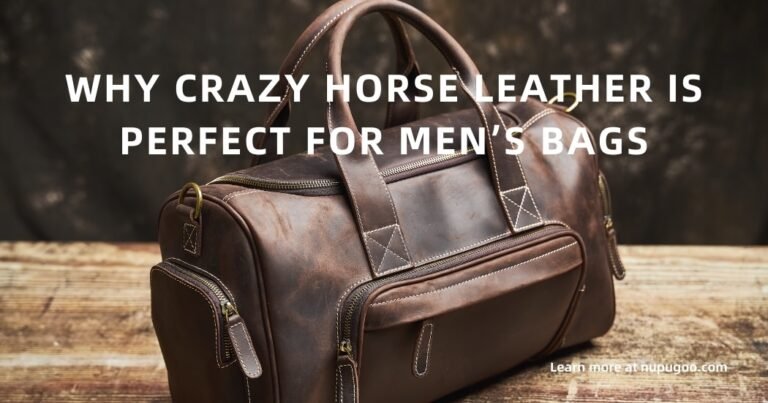
Crazy horse leather often creates strong contrast after engraving. Its waxed surface can reveal lighter tones underneath, and daily use creates a rugged vintage effect. This makes it excellent for messenger bags, duffel bags, briefcases, tote bags, and men’s leather gifts.
Vegetable-tanned leather develops one of the most recognizable patinas. It can shift from a pale tan to honey, caramel, or deep brown. Engraving on vegetable-tanned leather can become warmer and richer over time, which is ideal for commemorative gifts.
Oil-wax leather has a smoother, more understated aging process. It can be a good choice for business leather bags and corporate gifts where the engraving should feel premium but not loud.
By contrast, heavily coated leather, synthetic leather, and plastic-like finishes usually do not age in the same way. They may accept a mark, but they do not develop the same depth of patina because the visible surface is not changing like natural full grain leather.
What This Means for Custom Logos
For business orders, full grain leather engraving offers a special advantage: the logo can feel durable without looking aggressive.
A printed logo can look promotional. A large metal badge can feel heavy or overly branded. A leather engraving is quieter. It gives the brand presence while still letting the product feel refined.
As the leather ages, the logo becomes more integrated into the bag. This is valuable for corporate gifts, boutique merchandise, team gifts, client appreciation gifts, and private-label leather products. The branding remains visible, but it does not feel disposable.
For brands that want to communicate quality, craftsmanship, and long-term value, engraved full grain leather is often a better match than surface printing.
How to Care for Engraved Full Grain Leather
Engraved full grain leather does not need complicated care. In most cases, the best approach is to care for the whole bag evenly and let the patina develop naturally.
Use a leather conditioner or wax suitable for the specific leather type. Crazy horse leather often responds well to a small amount of wax-based care product. Vegetable-tanned leather and oil-wax leather may require gentler products depending on the finish.
Apply conditioner lightly. Do not pack heavy conditioner into the engraved lines. A thin, even layer is enough. The goal is to nourish the leather, not fill the engraving.
Avoid long periods of direct sunlight, especially if only one part of the bag is exposed. Sunlight can deepen leather color, but uneven exposure may create uneven aging. Also avoid storing leather in damp, closed spaces, as moisture can affect the fibers.
Most importantly, do not try to stop the leather from changing. Patina is not a flaw. It is the reason engraved full grain leather becomes more beautiful.
What to Consider Before Ordering Engraved Leather Bags
The best engraved leather bags start with the right material and the right design.
Choose full grain leather when long-term aging matters. Corrected-grain leather, heavily coated leather, and synthetic leather may look clean at first, but they usually cannot develop the same rich patina.
Choose a suitable engraving position. The area should be stable, visible, and not too close to seams, folds, hardware, or high-stress points. A flat panel, luggage tag, front pocket, or reinforced leather patch often works well.
Keep the design clear. Very thin lines, overly detailed logos, and tiny lettering may not age as well as simple initials, clean icons, strong typography, or meaningful dates. Leather has natural texture, so the best engraving designs respect the material.
Finally, work with a maker who understands leather behavior. Laser power, speed, and depth should be adjusted based on leather type, color, oil content, and surface finish. Good engraving is not only about the machine. It is about knowing how the material will respond now and later.
Conclusion
Full grain leather ages beautifully after engraving because both the leather and the engraved mark continue to evolve. The surface deepens in color, develops patina, and gains a soft natural sheen. The engraved area remains part of the material, often becoming more integrated and more expressive with time.
For personalized leather bags, engraved gifts, and custom logo leather products, this is exactly what makes full grain leather special. The mark is not temporary decoration. It becomes part of the bag’s story.
If you want a personalized leather item that feels better after years of use, full grain leather engraving is one of the most timeless choices.
SEO Title
Why Full Grain Leather Ages Beautifully After Engraving
Meta Description
Learn why full grain leather engraving becomes richer over time as patina, texture, color depth, and daily use make personalized leather bags more meaningful.
FAQ
Does engraving on full grain leather fade?
Engraving does not fade in the same way that surface printing can fade. The contrast may change as the leather develops patina, but a well-made engraving usually remains visible and often becomes more natural-looking over time.
Is full grain leather good for laser engraving?
Yes. Full grain leather is one of the best choices for laser engraving because it has a natural surface, strong fiber structure, and the ability to develop patina after use.
Will engraved leather get darker over time?
The surrounding leather often becomes darker as it absorbs oils, waxes, light, and daily handling. The engraved area may also deepen or soften visually, depending on the leather type and finish.
Is crazy horse leather good for engraving?
Crazy horse leather is very suitable for engraving. Its waxed surface often creates strong contrast, and its vintage patina makes engraved initials or logos look more characterful with use.
Is engraving better than printing for leather bags?
For long-term use, engraving is usually better than printing because it changes the leather surface instead of adding a temporary layer on top. Printing can fade or peel, while engraving becomes part of the material.