Leather Engraving vs Embossing: What’s the Difference?
Leather Engraving vs Embossing: What’s the Difference?
Two words used interchangeably. Two very different things.
The Confusion Is Understandable
Search for “personalized leather bag” and you will find products described as “engraved,” “embossed,” “debossed,” “stamped,” and “monogrammed” — often with no explanation of what each word means. The terms get used loosely, sometimes incorrectly, and occasionally as pure marketing synonyms.
They are not synonyms. The techniques are physically different. The results look different. The best use cases are different. And if you are ordering a custom leather item, knowing which method you are getting matters.
How Engraving Works
Engraving removes material from the leather surface. In the context of leather bags, this almost always means one of two methods:
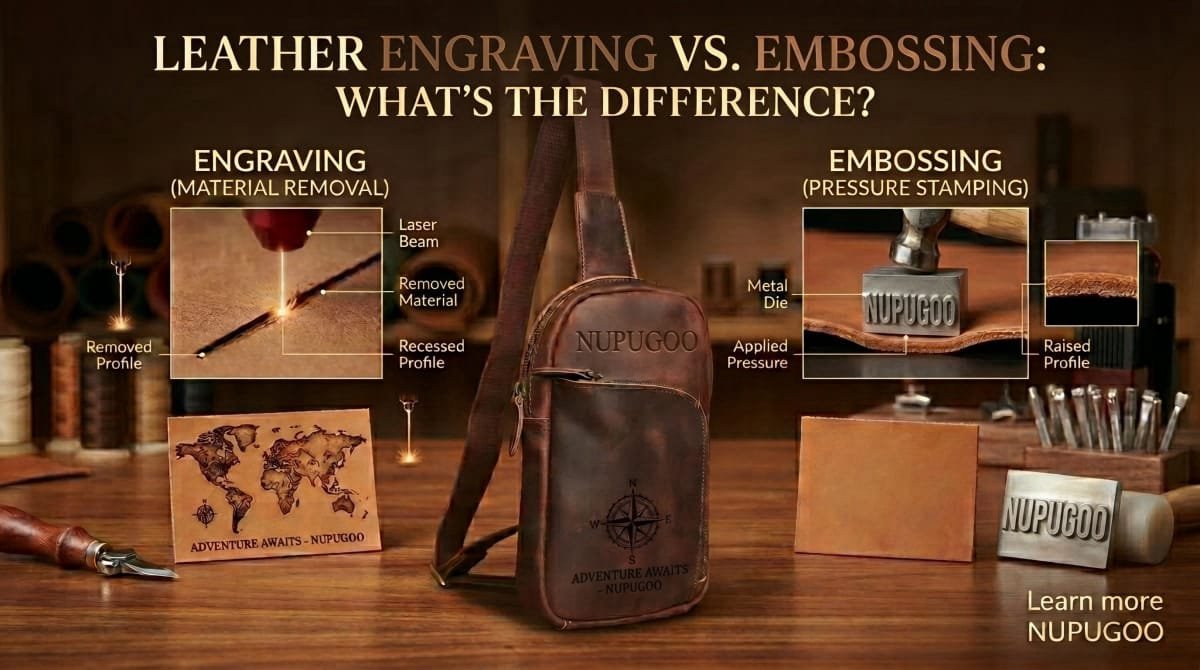
Laser engraving uses a concentrated beam of light to burn away the top layer of leather in the pattern of your design. The laser moves across the surface according to a digital file, controlling depth through power and speed settings. The result is a mark that is darker than the surrounding leather — because the burned area absorbs light differently than the natural surface — and slightly recessed due to the material removal.
Hand engraving (carving) uses a swivel knife to cut into the leather surface, followed by shaping tools that bevel and model the cut edges to create relief and shadow. This is a skilled craft technique, slower and more expensive than laser work, and produces an organic, three-dimensional quality that a laser cannot replicate.
Both engraving methods create a mark that cannot be removed — the leather fibers have been physically altered. There is no coating to peel, no ink to fade. The mark is in the leather.
How Embossing Works
Embossing presses a design into the leather surface using a metal die. The die — essentially a metal stamp with the design cut into or raised from its face — is pressed against the leather under controlled pressure, sometimes combined with heat.
The leather fibers compress and displace to take the shape of the die. When the die is removed, the impression remains permanently set in the leather’s structure.
Debossing (also called blind embossing) presses the design down into the surface, creating a recessed impression. This is the most common embossing method on leather bags — the design sits below the surface plane, giving it a clean, tactile quality and protecting it from surface abrasion.
Raised embossing pushes the design up from beneath, so it stands above the surrounding surface. Less common on bags because raised areas are more vulnerable to wear over time.
Heat stamping adds temperature to the die process, which permanently sets the impression with greater crispness and helps the fibers hold the design long-term. This is the standard method for professional monogramming on leather goods.
Side by Side
| Laser Engraving | Deboss Embossing | |
|---|---|---|
| Material removed? | Yes | No |
| Design sits… | Slightly recessed, color-contrast mark | Recessed tactile impression |
| Requires physical die? | No — uses digital file | Yes — metal die required |
| Color difference from leather | Darker or contrasting | Same color as leather |
| Best detail level | Very fine — small text, complex logos | Bold — clean lines, large monograms |
| Typical use | Text, logos, detailed artwork | Initials, symbols, simple marks |
| Feel to the touch | Smooth with slightly different texture | Clearly tactile impression |
| Setup cost | Low — no die needed | Higher — die creation required |
Which Should You Choose?
Choose laser engraving when:
- Your design has fine details, thin lines, or small text
- You want visible color contrast between the mark and the leather
- You want a modern, precise aesthetic
- You are ordering a small quantity (no die cost)
Choose deboss embossing when:
- Your design is bold — a monogram, a symbol, a wordmark
- You prefer a tactile impression over a color mark
- You want a classic, traditional appearance
- You are ordering enough units to justify the die cost
Both methods are permanent. Both work well on full-grain leather. The choice is primarily aesthetic and practical — what does your design look like, and which technique makes it read best on leather?
The “Monogram” Question
Monograms are almost always embossed rather than engraved. The reason is proportion: monogram letters are typically bold, relatively large, and benefit from the three-dimensional quality of an embossed impression. The tactile element — the fact that you can feel the letters under your fingers — is part of what makes a monogram feel premium on a leather bag.
Small text, fine scripts, and detailed logos, on the other hand, are typically laser-engraved because the precision of the laser beam captures detail that a die cannot.
If you see a “monogrammed leather bag” described as “engraved,” the brand is almost certainly using the terms loosely. Ask which technique they actually use.
A Note on Debossing
“Debossing” is not a word you see consistently in everyday language, but it is the most precise term for the standard embossing technique on leather bags. It specifically means a recessed impression — pressed down, not raised up. When people say “embossed leather” and mean a design you can feel that sits below the surface, “debossed” is the technically accurate term.
The distinction matters if you are placing a corporate order or working with a manufacturer, because “embossed” and “debossed” describe different die orientations and produce different results. For everyday conversation, most people use “embossed” to mean both, and the context usually makes the intent clear.