
Best Leather Types for Embossing: A Practical Guide for Custom Leather Bags
Embossing can turn a leather bag from a useful everyday item into something personal, memorable, and brand-ready. A set of initials on a messenger bag, a company logo on a briefcase, or a short message on a wallet all depend on one quiet detail: the leather itself.
The best leather types for embossing are not only beautiful. They need enough body to hold pressure, enough surface quality to show the mark clearly, and enough character to make the final result feel intentional rather than forced. For NUPUGOO customers choosing personalized leather bags, the leather choice matters just as much as the design.
What Makes Leather Good for Embossing?
Leather embossing uses pressure, heat, or both to press a design into the leather surface. The result may be a recessed mark, a raised texture, or a heat-stamped impression depending on the technique.
Good embossing leather usually has three qualities:
- A firm, stable structure that can hold the impression
- A surface that is not overly corrected or coated
- Natural grain that adds depth without hiding the design
Very soft leather can look elegant, but it may not keep a sharp embossed edge. Heavily coated leather may resist the stamp or create a shallow result. Thin leather may show distortion if the pressure is too strong.
For bags, the goal is balance. The leather should be strong enough for daily use and refined enough for clean personalization.
Full-Grain Leather: The Best All-Around Choice
Full-grain leather is often the strongest option for embossing because it keeps the natural top layer of the hide. That surface gives the leather durability, texture, and a premium look that works especially well with initials, monograms, and simple logos.
On full-grain leather bags, embossing tends to feel rich rather than decorative. The mark becomes part of the material, not something sitting on top of it. This is why full-grain leather is a strong choice for business bags, travel bags, wallets, and long-lasting gifts.
Best for:
- Monograms and initials
- Minimal logo embossing
- Premium leather messenger bags
- Personalized business gifts
- Long-term daily carry
The tradeoff is that natural grain can vary from piece to piece. That is part of the appeal, but it also means a logo may look slightly different across different leather panels. For a handmade leather product, this variation usually makes the piece feel more authentic.
Vegetable-Tanned Leather: Sharp, Clean, and Traditional
Vegetable-tanned leather is one of the classic choices for embossing. It is firm, responsive to pressure, and known for developing a beautiful patina over time. If the design needs crisp edges, this leather can be excellent.
It works especially well for wallets, luggage tags, notebooks, small leather goods, and structured bag parts. For larger bags, vegetable-tanned leather can look refined, but it may feel stiffer than other options at first.
Best for:
- Sharp initials
- Deep debossing
- Heritage-style leather goods
- Gift pieces that will age visibly
- Clean logo samples
Vegetable-tanned leather can darken with use and exposure. That aging is usually desirable, but customers should understand that the embossed area may become more subtle as the whole piece develops patina.
Crazy Horse Leather: Vintage Character with a Softer Mark
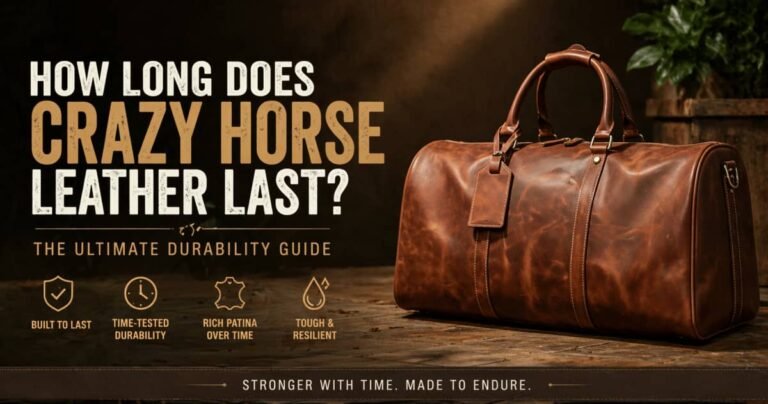
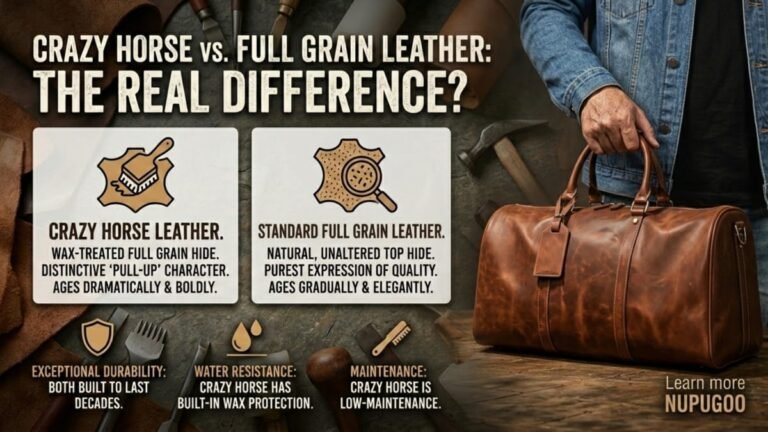
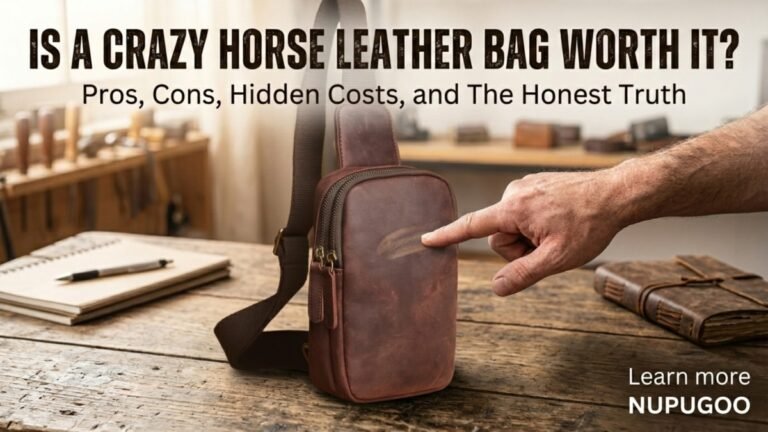
Crazy horse leather is popular for vintage-style bags because of its pull-up effect, waxy surface, and natural color movement. It scratches easily, and those scratches are part of its character. Over time, it can develop a rugged patina that makes each bag feel individual.
For embossing, crazy horse leather bags can be beautiful, but the result is different from a clean vegetable-tanned stamp. The mark may look softer, warmer, and more integrated into the vintage finish. It is usually best for initials, simple names, and understated personalization rather than tiny detailed artwork.
Best for:
- Vintage monograms
- Initials on messenger bags or duffle bags
- Personal gifts with a handmade feel
- Subtle brand marks
- Customers who like natural aging
One thing to remember: crazy horse leather may transfer color when new, wet, or rubbed against light clothing. It is not a waterproof leather. For embossing customers, it is best to choose simple artwork and allow the leather’s natural movement to be part of the final look.
Top-Grain Leather: Smooth and Commercially Clean
Top-grain leather can also work well for embossing, especially when the surface is smooth and the leather has enough thickness. It often gives a more uniform appearance than full-grain leather, which can be useful for bulk orders or corporate branding.
The main question is the finish. Some top-grain leathers have coatings that reduce how deeply the stamp can enter the surface. If the coating is too heavy, the embossed result may look flat.
Best for:
- Corporate logo orders
- Cleaner, more consistent surfaces
- Larger batches
- Bags with a modern polished look
For brand orders, it is worth testing one sample before production. A simple sample can confirm stamp depth, logo size, and color behavior before the full order begins.
Suede and Nubuck: Beautiful, but Not Always Ideal
Suede and nubuck have soft, brushed surfaces. They can look luxurious, but they are not usually the first choice for crisp embossing on leather bags. The nap can blur details, and pressure marks may change as the surface is brushed or handled.
That does not mean they are impossible to personalize. Larger, simpler designs may work, especially for decorative panels. Still, for a clear monogram or logo, full-grain, vegetable-tanned, or suitable top-grain leather is usually more reliable.
Best for:
- Large, simple marks
- Soft decorative effects
- Low-contrast personalization
Not ideal for:
- Tiny lettering
- Detailed logos
- Sharp business branding
Embossing vs Debossing vs Foil Stamping
Many customers use “embossing” to describe several different leather personalization methods. The differences matter when choosing leather.
Embossing usually creates a raised or textured surface. Debossing presses the design downward into the leather. Foil stamping adds metallic or colored foil with heat and pressure.
For understated personalization, blind debossing is often the most elegant choice. It keeps the leather natural and avoids adding color. For gift items or brand marks that need more visibility, foil stamping can work, but the leather surface must be compatible with heat and foil adhesion.
If you are ordering personalized leather bags, ask about the method before finalizing the artwork. The same leather can behave differently under blind debossing, heat stamping, and foil stamping.
How to Choose the Right Leather for Your Design
The best leather type depends on what you want the embossing to communicate.
Choose full-grain leather if you want a premium, durable, natural look. Choose vegetable-tanned leather if you want crisp detail and traditional leather character. Choose crazy horse leather if you want a vintage, personal, lived-in feeling. Choose top-grain leather if you need a smoother surface for consistent brand orders.
Design size also matters. Small initials can work beautifully on many leather types. Detailed logos need cleaner surfaces and enough stamp area. Large marks require careful placement so they do not interfere with seams, zippers, straps, or curved panels.
For bags such as leather messenger bags and leather duffle bags, the best embossing position is often a flat panel, tag, patch, handle wrap, or front flap. These areas give the stamp enough support and make the personalization easy to see.
Final Thoughts
The best leather types for embossing are the ones that match both the design and the purpose of the bag. Full-grain leather offers the strongest all-around balance. Vegetable-tanned leather gives crisp traditional detail. Crazy horse leather brings vintage character. Top-grain leather can support clean commercial branding when the finish is suitable.
For a personal gift, initials on natural leather can feel quiet and thoughtful. For a business order, a simple logo on the right leather can make the product feel polished without becoming too loud. Good embossing starts before the stamp touches the leather; it starts with choosing the material that can carry the mark well.