
Why Is Crazy Horse Leather So Expensive? The Real Reasons Behind the Price
If you’ve been shopping for leather bags and come across Crazy Horse Leather products, you’ve probably noticed something: the price tag doesn’t lie. A well-made Crazy Horse Leather bag can cost significantly more than bags made from standard leather or synthetic materials.
So what’s behind the higher price? Is it justified, or are you paying for marketing?
In this article, we’ll break down exactly why Crazy Horse Leather commands premium prices—from the raw materials and craftsmanship to the long-term value it delivers. By the end, you’ll understand where every dollar goes, and why many customers consider it money exceptionally well spent.
What Exactly Is Crazy Horse Leather?
Before diving into the cost breakdown, let’s clarify what Crazy Horse Leather actually is.
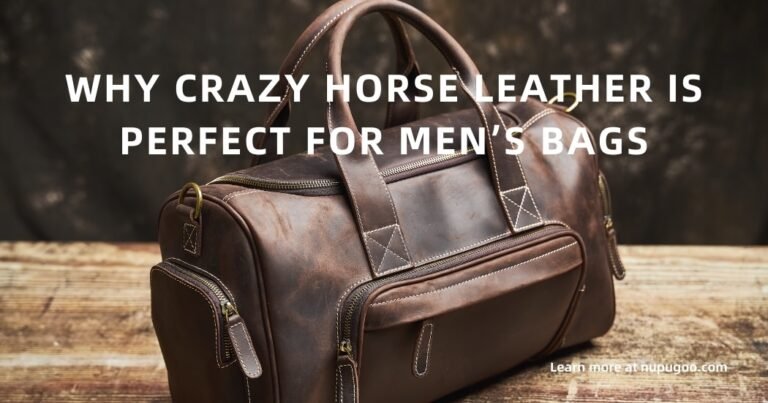
Crazy Horse Leather is a type of full-grain cowhide leather that has been treated with a special wax coating. Unlike lower-quality leather types that use the inner layers of the hide (split leather or bonded leather), Crazy Horse uses only the top layer—the part that is naturally strongest, tightest, and most durable.
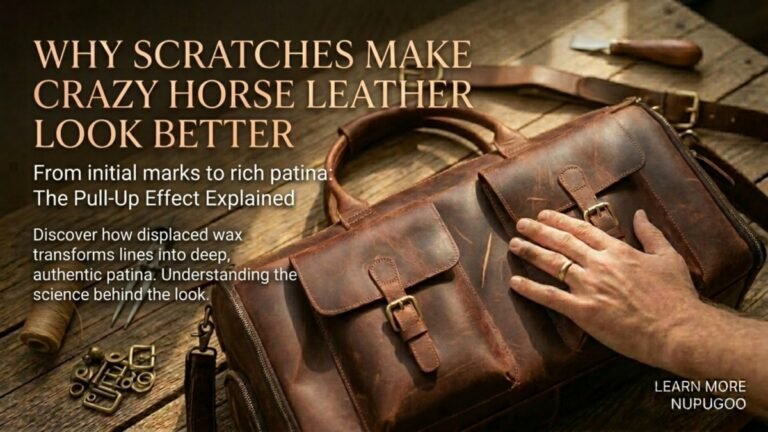
The wax treatment is what gives it the signature Pull-Up Effect: when the leather is bent, flexed, or scratched, the wax moves and creates beautiful light-and-dark contrast patterns. No two Crazy Horse Leather bags age the same way, making each one truly one of a kind.
This combination of premium raw material + artisanal finishing is at the heart of why the price is higher.
The 8 Reasons Why Crazy Horse Leather Costs More
1. 💰 Premium Raw Material — Full-Grain Hide Only
Not all leather is created equal. The quality of leather is determined largely by which layer of the hide is used:
| Hide Layer | Leather Type | Quality | Durability |
|---|---|---|---|
| Top layer | Full-Grain Leather | ✅ Highest | 15–30+ years |
| Middle layer | Genuine Leather | ⚠️ Medium | 2–5 years |
| Bottom layer | Split Leather / Bonded | ❌ Low | 1–3 years |
Crazy Horse Leather exclusively uses full-grain hide—the top layer. This layer features the tightest fiber structure, natural surface markings, and inherent strength. Only about 10–15% of all raw hides meet the quality standard required for full-grain production. That scarcity alone drives up the material cost significantly.
2. 🐄 Sourcing Costs — Premium Hides Don’t Come Cheap
The cows that produce the best hides for Crazy Horse Leather are raised under specific conditions:
- European & South American cattle (common sources): Raised in cleaner environments with fewer parasites, resulting in hides with fewer scars, brands, or insect damage
- Free-range grazing: Movement and exercise create tighter, more uniform skin structure
- Special diet & care: Reduces skin imperfections and improves overall leather quality
A high-quality full-grain hide can cost 3 to 5 times more than a standard hide used for bonded leather or lower-grade products. This premium raw material cost is the first major driver of the final retail price.
3. 🧴 The Wax Treatment Process Is Labor-Intensive
The signature wax coating that defines Crazy Horse Leather isn’t applied in a single industrial step—it’s a multi-stage artisanal process:
- Hide Preparation: The raw hide is carefully cleaned, dehaired, and limed to remove impurities
- Tanning: The hide is vegetable-tanned (using natural tree bark) or combination-tanned—a slow process that takes weeks
- Dyeing: Natural dyes are applied to achieve rich, deep colors
- Wax Application: High-quality wax (often a blend of natural and refined waxes) is applied by hand or machine
- Heating & Polishing: The wax is heated and polished to penetrate the leather fibers and create the Pull-Up Effect
- Quality Control: Each piece is inspected for consistency, texture, and finish quality
This process is far more labor-intensive and time-consuming than the industrial production of PU leather or treated split leather. Every step adds to the cost.
4. 🛠️ Exceptional Craftsmanship Required
Crazy Horse Leather demands higher-quality craftsmanship throughout the manufacturing process:
- Cutting: Full-grain leather is thicker and more difficult to cut precisely; mistakes are costly
- Stitching: Thicker needles, stronger thread, and more precise techniques are required
- Edge Finishing: The natural grain makes edge finishing more challenging but more beautiful when done right
- Hardware: Quality Crazy Horse Leather bags typically use solid brass, zinc alloy, or stainless steel hardware—not cheap plastic or lightweight metals
Manufacturers who work with Crazy Horse Leather are typically experienced artisans or specialized workshops with higher labor costs. You can’t rush great leatherwork.
5. 🔩 Superior Hardware and Accessories
A leather bag isn’t just about the hide. The hardware—buckles, clasps, rings, rivets, zippers—matters enormously for both durability and aesthetics.
Premium Crazy Horse Leather bags typically use:
- Solid brass buckles: Tarnishes beautifully over time, never rusts
- YKK or SBS zippers: Industry-leading quality, smooth operation for years
- Stainless steel D-rings: Won’t corrode or weaken over time
- Reinforced rivets: Extra layers of leather and metal at stress points
Each of these components costs more than the cheap zinc alloy or plastic hardware found in budget bags. The total hardware package alone can add $5–$20 to the production cost per bag.
6. 📦 Limited Scalability — It’s Not Mass Production
Unlike PU leather or fabric bags that can be churned out by the thousands in automated factories, working with full-grain Crazy Horse Leather is inherently less scalable:
- Natural material variation: Each hide is unique; machines can’t process them uniformly
- More manual steps: Requires skilled workers at multiple stages
- Smaller batch production: Quality-focused brands typically produce in smaller runs with tighter quality control
Mass production brings costs down dramatically through economies of scale—but it also sacrifices the quality and uniqueness that make Crazy Horse Leather special. You’re paying a premium for a product that was made with care, not cranked out on a conveyor belt.
7. 🔍 Strict Quality Control
Premium brands stand behind their Crazy Horse Leather products with quality guarantees that budget manufacturers simply don’t offer:
- Multi-point inspection before and after construction
- Stress testing on handles, straps, and seams
- Color consistency checks across all panels
- Hardware functionality testing (zippers, buckles, clasps)
This level of quality control requires more time, more skilled labor, and more rejected (or reworked) products—all of which get factored into the retail price.
8. 🎨 Natural Aging Value — You Get What You Pay For
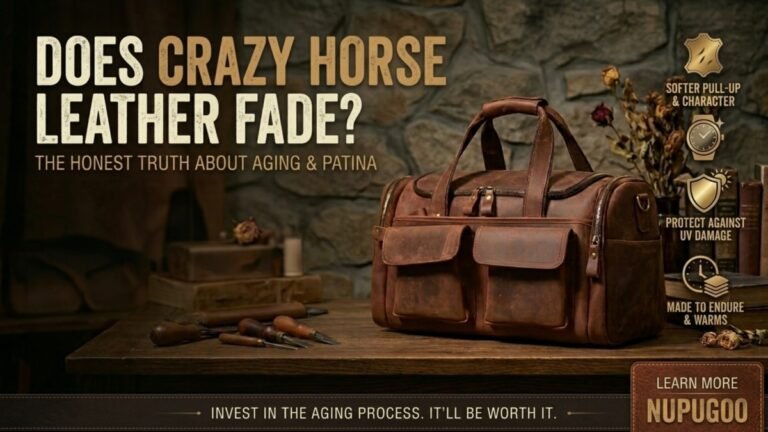
Here’s the thing that most buyers don’t realize until years later: Crazy Horse Leather actually becomes more beautiful with use.
While a cheap bag starts deteriorating the moment you take it out of the box, a Crazy Horse Leather bag develops a rich, personal patina that tells the story of your journeys. This isn’t just marketing—it’s a genuine, measurable increase in the bag’s aesthetic value over time.
So when you pay $200–$400 for a Crazy Horse Leather bag, you’re not just paying for the materials and labor today. You’re paying for a product that will look better in 5 years than it did on day one—a product that rarely needs replacing.
The True Cost Comparison: Is Crazy Horse Leather Actually Worth It?
Let’s do the math on long-term value:
| Product Type | Initial Cost | Average Lifespan | Total Cost Over 20 Years | Value Retained |
|---|---|---|---|---|
| PU Leather Bag | $30–$50 | 1–3 years | $300–$1,000 (replacements) | ❌ Zero |
| Genuine Leather Bag | $80–$150 | 2–5 years | $320–$1,500 (replacements) | ⚠️ Low |
| Crazy Horse Leather Bag | $200–$400 | 10–30+ years | $200–$400 (one-time) | ✅ High (patina increases) |
Break-even point: A Crazy Horse Leather bag typically pays for itself compared to cheap bags within 1–3 years. Beyond that, you’re saving money—and getting a better-looking bag in the process.
What Are You Really Paying For?
Here’s a quick breakdown of where your money goes when you buy a quality Crazy Horse Leather bag:
| Cost Component | Approximate Share |
|---|---|
| Full-grain hide (premium raw material) | ~25–30% |
| Wax treatment & finishing labor | ~15–20% |
| Skilled craftsmanship (cutting, stitching) | ~20–25% |
| Premium hardware (buckles, zippers, etc.) | ~8–12% |
| Quality control & testing | ~5–8% |
| Brand, design, and overhead | ~10–15% |
The largest portion of your investment goes directly into materials and craftsmanship—not marketing budgets or brand premiums.
How to Make Sure You’re Getting Genuine Crazy Horse Leather
Unfortunately, the growing popularity of Crazy Horse Leather has also attracted counterfeits and misleading marketing. Here’s how to make sure you’re getting the real thing:
1. Check the Pull-Up Effect
Genuine Crazy Horse Leather will show a light-to-dark color shift when you bend or rub the surface. If the color stays uniform, it’s likely not the real thing.
2. Smell the Leather
Real full-grain leather has a natural, rich leather smell. If it smells like chemicals, plastic, or nothing at all, it’s probably not genuine.
3. Examine the Grain
Full-grain leather retains the natural surface grain of the hide, including minor imperfections, scars, or growth marks. If the surface looks too perfect or too uniform, it’s likely lower-quality or synthetic.
4. Price Reality Check
If a “Crazy Horse Leather” bag is priced at $20–$50, it’s almost certainly fake or made from the lowest-quality leather types with misleading marketing. Genuine Crazy Horse Leather bags start at around $150–$200 for smaller items.
5. Buy From Reputable Sellers
Look for sellers who explain their leather sourcing and craftsmanship process. Brands like NUPUGOO that specialize in Crazy Horse Leather will provide details about the hide type, tanning process, and warranty information.
Conclusion: Why Crazy Horse Leather Is Worth the Investment
Here’s the bottom line:
Crazy Horse Leather costs more because everything about it is better:
- ✅ Better raw materials (full-grain hide, not split or bonded)
- ✅ Better craftsmanship (skilled artisans, not mass production)
- ✅ Better hardware (solid brass, not cheap zinc)
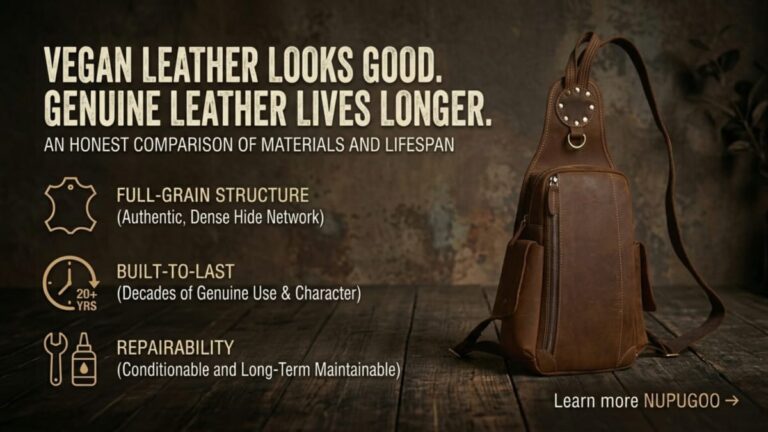
- ✅ Better longevity (10–30+ years vs. 1–5 years)
- ✅ Better aesthetics (unique patina vs. deterioration)
When you calculate the cost per year of use, Crazy Horse Leather is often the most economical choice in the long run—even though the upfront cost is higher.
You’re not paying more. You’re paying once.
Ready to invest in a bag that will serve you for decades? Explore NUPUGOO’s curated collection of handcrafted Crazy Horse Leather bags—where quality materials meet artisanal craftsmanship.