
Minimum Order Quantity for Custom Leather Products: What Brands Should Know Before Ordering
Why MOQ Matters in Custom Leather Production
Minimum order quantity for custom leather products is one of the first questions most brands ask before starting a private label, corporate gift, or customized leather goods project.
MOQ simply means the smallest quantity a supplier can produce for one order under a specific set of requirements. For leather products, this number can change depending on the product style, leather type, logo method, hardware, lining, color, packaging, and production process.
For buyers, MOQ is not only a number. It affects budget, risk, sampling, inventory planning, shipping cost, and the final unit price. Understanding how MOQ works helps a brand plan a smarter first order instead of choosing a quantity blindly.
Why Custom Leather Products Have MOQ
Leather goods are not produced like simple printed items. Even a small leather bag, wallet, or accessory may involve pattern making, leather cutting, edge finishing, stitching, hardware installation, lining, quality inspection, and packing.
When customization is added, the factory may also need to prepare logo molds, embossing plates, laser engraving settings, custom hardware, special leather colors, or branded packaging. These steps take setup time before mass production begins.
MOQ helps cover that setup work. It also helps the factory use materials efficiently, arrange production lines, control labor cost, and keep the final price realistic.
This is why a fully customized leather bag usually has a higher MOQ than a simple logo customization on an existing style.
Typical MOQ Depends on the Customization Level
There is no single MOQ that applies to every leather product. The more changes a buyer needs, the more the MOQ may increase.
For a standard leather bag with logo embossing or engraving, MOQ may be easier to manage because the base product pattern already exists. This is often a good route for corporate gifts, event gifts, team gifts, and first private label tests.
For a semi-custom project, the brand may keep an existing bag structure but change leather color, stitching color, lining, zipper puller, logo placement, or packaging. MOQ may be higher because more materials and production coordination are involved.
For a fully custom design, the factory may need to create a new pattern, test structure, adjust dimensions, source special materials, and make several samples before production. This type of project usually requires a higher MOQ because the setup work is much larger.
Product Type Also Affects MOQ
The product category matters.
Small leather goods such as card holders, wallets, keychains, luggage tags, and leather patches may have a lower unit cost, but they can still require a meaningful MOQ because production needs batch efficiency.
Larger products such as leather messenger bags, briefcases, backpacks, duffle bags, and laptop bags require more leather, more hardware, more skilled labor, and more inspection time. The MOQ may depend heavily on the design complexity and material availability.
For example, a custom logo leather bag based on an existing design may be easier to start than a completely new briefcase with unique compartments, custom hardware, and special lining.
Leather Type Can Change the Quantity
Leather is one of the biggest factors behind MOQ.
If the supplier already has suitable leather in stock, a smaller order may be possible. If the buyer wants a special color, special finish, or exclusive material, the tannery or leather supplier may have its own minimum purchase requirement.
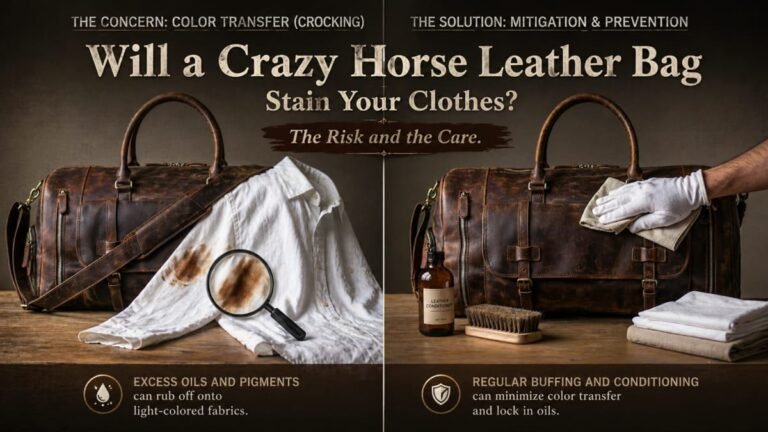
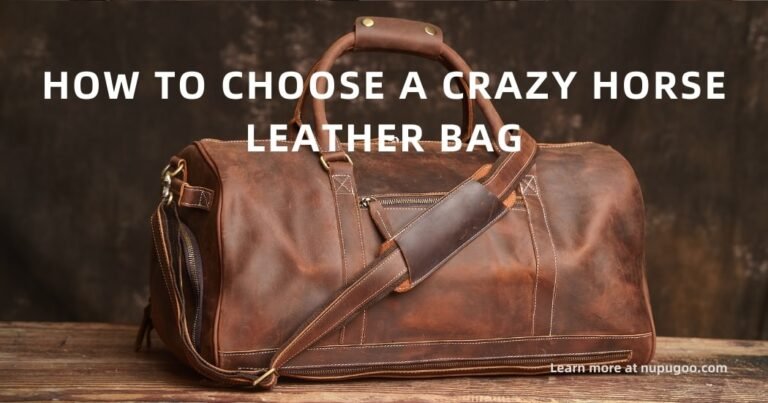
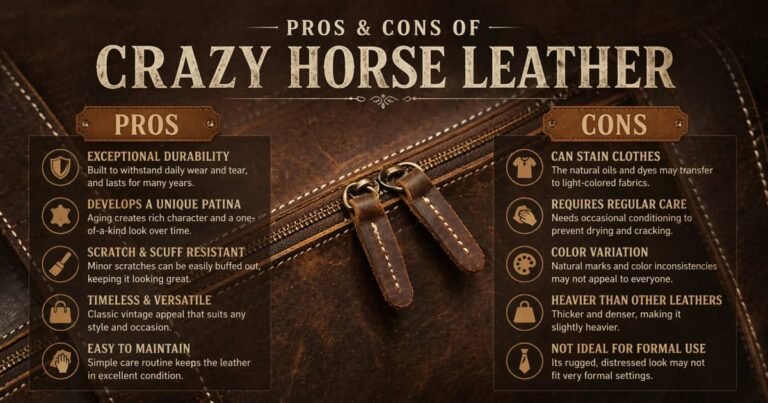
Full-grain leather, crazy horse leather, oil wax leather, and smooth cowhide can all behave differently in cutting, logo pressing, color matching, and finishing. A brand choosing full-grain leather bags may care more about a clean premium surface, while a brand choosing crazy horse leather bags may prefer a vintage pull-up effect and natural marks.
Both can be good choices, but the available leather stock and color requirement can influence the MOQ.
Logo Method Makes a Difference
Logo customization is one of the most common reasons brands ask about MOQ.
Embossing and debossing usually require a mold or plate. Once the mold is made, it can often be reused for future orders, but the first order needs to absorb the setup cost.
Laser engraving can be flexible for some designs, especially when the logo has clear lines. Printing may work for certain branding needs, but it may not always feel as premium on leather as pressed or engraved branding.
For personalized leather bags, individual initials or names may also affect workflow because every piece needs separate handling. This does not always increase MOQ, but it can affect production time and unit cost.
Why Lower MOQ Often Means Higher Unit Price
Many buyers ask for the lowest possible MOQ, which is understandable. A smaller first order reduces inventory pressure and makes market testing easier.
But a low MOQ often comes with a higher unit price.
The reason is simple: setup work, sampling, mold preparation, material sourcing, cutting arrangement, and production management are spread across fewer pieces. A factory may still need similar preparation time whether the order is 30 pieces or 300 pieces.
For a brand, the question is not only, “What is the MOQ?” A better question is, “What quantity gives us the best balance between risk, cost, and selling plan?”
Sample Orders and Bulk Orders Are Different
A sample is not the same as bulk production.
A sample helps confirm the design, leather, size, logo placement, hardware, stitching, and overall feel. It may cost more per piece because it is made separately and requires extra communication.
Bulk production is planned as a batch. Once the sample is approved, the factory can prepare materials, arrange cutting, organize workers, and inspect finished goods more efficiently.
Brands should use samples to reduce risk, but they should not judge the final bulk unit cost by sample price alone.
How to Discuss MOQ With a Supplier
The most useful MOQ discussion starts with clear project details.
Before asking for a quote, prepare the product type, target quantity, preferred leather, color, dimensions, logo file, logo method, packaging needs, target market, and expected delivery time.
If the brand is flexible, say so. For example, using an existing leather color, existing hardware, or an existing bag pattern may help reduce MOQ. If the brand needs a unique design, special color, or exclusive material, the supplier can explain which parts affect the quantity.
Clear communication saves time on both sides and usually leads to a more realistic quote.
Practical Ways to Start With Lower Risk
Brands that are new to custom leather products can reduce risk without forcing the factory into an unrealistic MOQ.
Start with an existing style and customize the logo, packaging, or small details. Choose leather that is already available. Keep the first collection focused instead of launching too many colors or styles at once. Use one logo method consistently across the order. Approve a physical sample before bulk production.
For corporate gifts, a smaller selection of high-quality leather bags often feels better than too many variations. For retail brands, starting with one hero product can make inventory easier to manage.
What Buyers Should Check Before Confirming MOQ
Before confirming an order, buyers should check more than the quantity.
Confirm the leather type, leather thickness, color standard, logo size, logo position, hardware finish, lining, stitching, sample approval process, production time, packing method, carton details, shipping plan, payment terms, and quality inspection standard.
Also ask whether the MOQ applies per style, per color, per logo, or per total order. This detail matters. A supplier may accept 100 pieces total, but if the order includes five colors, the production may become more complicated.
Final Thoughts
Minimum order quantity for custom leather products is not just a factory rule. It reflects material sourcing, setup work, production efficiency, and the level of customization required.
For brands, the best approach is to match the MOQ with the business stage. A first order can focus on existing styles, proven leather, and tasteful logo customization. A larger or more established project can move toward exclusive colors, new patterns, or deeper private-label details.
When the MOQ, sample process, and customization plan are clear from the beginning, custom leather production becomes much easier to manage.